Almost every flooring decision in Dubai eventually lands on the same fork in the road: marble or porcelain? One is the timeless luxury everyone pictures in a Dubai villa. The other is the quietly practical choice that half the city’s apartments are now built with. And the advice you find online is usually written by someone trying to sell you one or the other.
We fit both, marble one week and porcelain the next, so we genuinely don’t mind which you pick. What we do mind is people choosing the wrong one for the room and regretting it a year later. So here is the honest, installer’s-eye comparison: what each actually costs, how they hold up in Dubai’s specific climate, and which one wins in which room.
The quick answer
If you want a one-line version: porcelain is the smarter all-rounder for most Dubai homes, being more durable, lower maintenance, and far cheaper, while marble is the luxury statement that’s worth it in the right, low-traffic spaces. Most well-designed homes here actually use both. The detail is where it gets interesting.
Side-by-side: porcelain vs marble
| Factor | Porcelain Tile | Natural Marble |
|---|---|---|
| Cost (per m²) | AED 25-120 | AED 80-500+ |
| Durability | Excellent, very hard, scratch-resistant | Very good, but softer and scratches |
| Heat resistance | Excellent, very stable | Good, but can hairline-crack over years of heat/AC cycling |
| Water & stains | Excellent (near non-porous) | Moderate, porous, needs sealing, etches from acids |
| Maintenance | Very low, sweep and mop | Medium, sealing, pH-neutral cleaners, periodic polishing |
| Look | Consistent, modern, marble-look options | Unique natural veining, real depth and luxury |
| Slip (wet) | Good (with the right finish) | Can be slippery when polished |
| Best for | Kitchens, bathrooms, high-traffic, outdoors | Formal living, entrances, feature areas |
(AED/m² are typical 2026 Dubai supply ranges and vary by grade and brand; confirm with a current quote.)
Cost: the honest numbers
This is usually the deciding factor, so let’s be direct.
Porcelain runs roughly AED 25-120 per m². Budget ranges start low, while premium Italian and Spanish rectified porcelain, the stuff that convincingly mimics marble, sits at the top.
Marble starts around AED 80 per m² for more common varieties and climbs to AED 300-500+ per m² for premium Italian Calacatta or Statuario.
But here is the part the tile-shop blogs skip: the tile price isn’t the real cost. Marble also needs skilled installation, sealing, and ongoing maintenance (polishing every few years, careful cleaning). Porcelain is largely fit-and-forget. So when you compare, compare the total cost over years, not the per-m² sticker. For a mid-sized villa floor, choosing quality marble-look porcelain over genuine Calacatta can save tens of thousands of dirhams, often without most guests ever noticing the difference once the room is furnished.
How they cope with Dubai specifically
This is where local knowledge matters more than any spec sheet, because Dubai is a uniquely tough environment for floors.
Heat and the AC cycle. Your floor lives between blazing outdoor heat and cold indoor AC, all day. Porcelain is extremely stable through that. Natural marble, especially in sun-flooded or outdoor-connected areas, can develop hairline cracks over years of thermal cycling if it isn’t installed with flexible adhesive by someone who knows the climate.
Hard water. Dubai’s hard water is quietly brutal on marble. It’s a major reason polished marble floors go cloudy and dull here. Porcelain shrugs it off. (If your marble already looks foggy, that’s a specific, fixable problem, and the cause is almost never dirt.)
Sand. Fine desert sand acts like sandpaper underfoot. Porcelain’s hardness resists that abrasion, while softer marble scratches more easily in busy entrances and hallways.
None of this rules marble out. It just means marble rewards the right placement and proper care, while porcelain forgives almost anything.
Which wins, room by room
Forget “which is better overall.” The real question is which is better for this room, and that’s where we save clients the most regret.
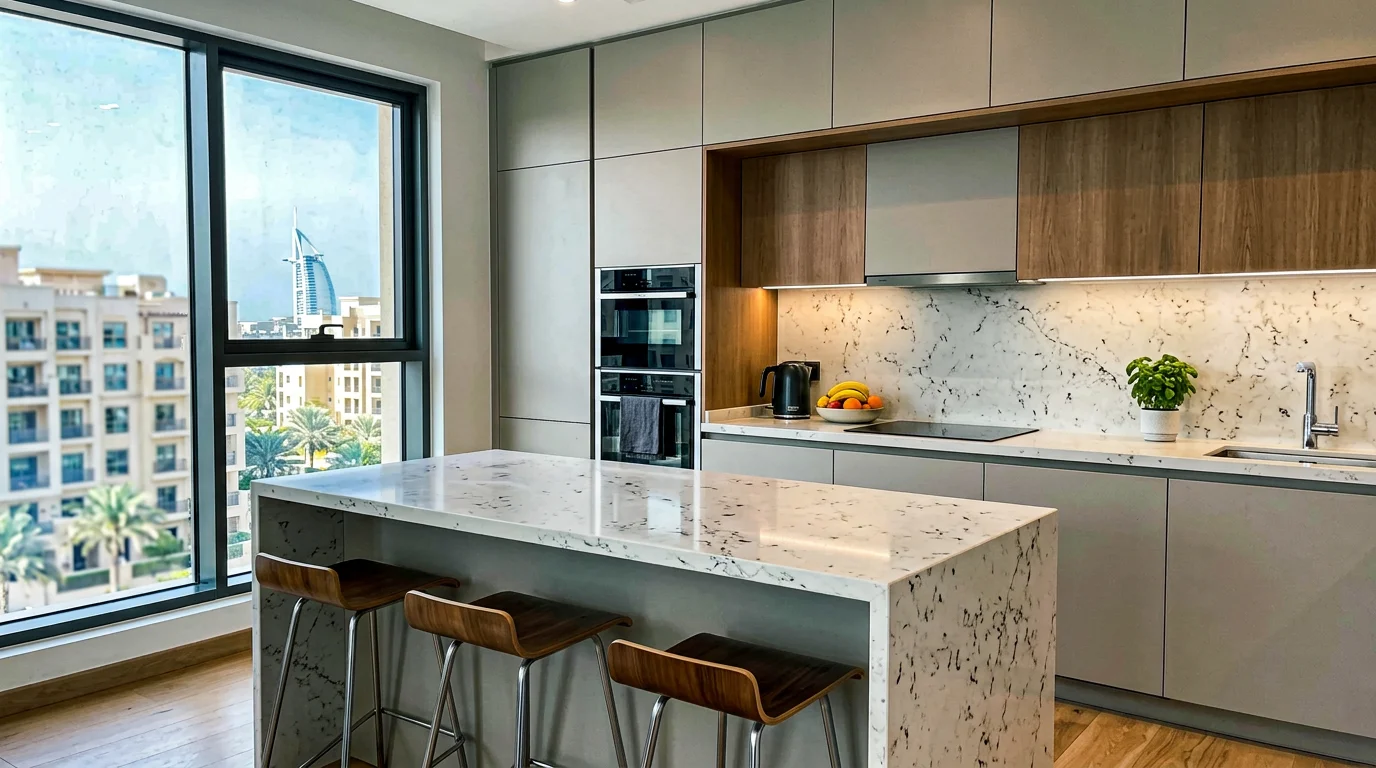
- Kitchen: Porcelain. Spills, acids, dropped pans, heavy traffic. Marble etches and stains here far too easily. This matters for any kitchen renovation (see our kitchen renovation cost guide).
- Bathrooms: Porcelain (or marble only if you’ll commit to sealing). Constant water and toiletries are hard on marble, so porcelain’s low porosity wins. Key for a bathroom renovation (here’s the bathroom renovation cost guide).
- Entrance / hallways: Porcelain for durability, or marble if you want the “wow” and can maintain it. Highest traffic plus the most sand.
- Formal living room / majlis: Marble. This is where its unmatched veining and luxury earn their keep, and traffic is gentler.
- Master bedroom: Either. Low traffic, so it comes down to budget and taste.
- Outdoor / terraces / pool surround: Porcelain, always, with an anti-slip finish. Marble struggles with UV, heat and wet-slip outdoors.
The pattern is clear: marble for the show spaces, porcelain everywhere that takes a beating.
So which should you choose?
Here is the decision boiled down:
Choose porcelain if you want low maintenance, maximum durability, wet or outdoor areas, high traffic, or you’re working to a budget. For most apartments and the hard-working areas of any villa, it’s the sensible answer.
Choose marble if you want genuine, unrepeatable luxury and a statement space, you value premium resale appeal, and you’re realistic about sealing and upkeep. In the right low-traffic room, nothing else feels quite like it.
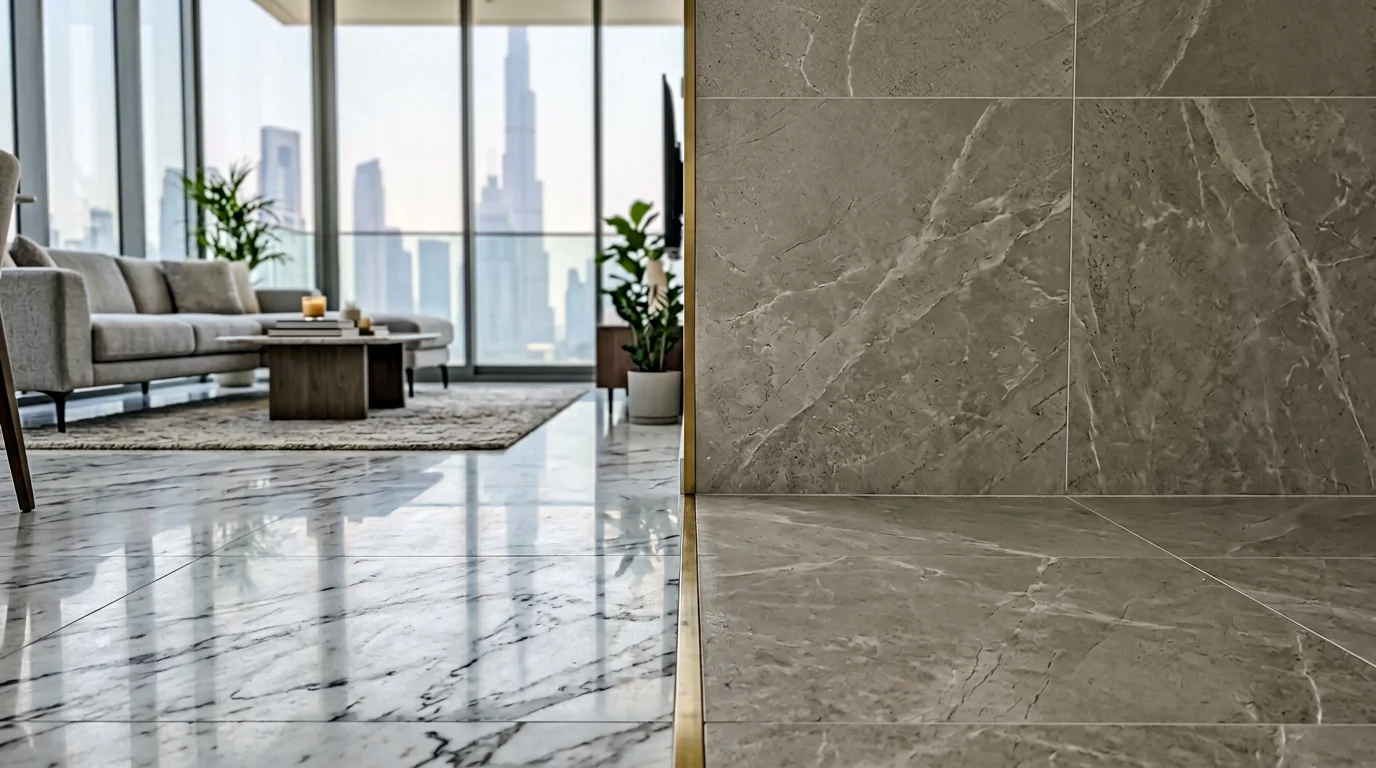
Choose both, which is what most well-designed Dubai homes do. Real marble where its character shines (entrance, formal living, a feature wall), and quality marble-look porcelain everywhere durability and easy care matter more. You get the luxury and the practicality.
Whichever you choose, the installation is what makes or breaks it. Marble laid without flexible adhesive and proper sealing, or porcelain laid with poor levelling and lippage, will disappoint no matter how good the material is. We handle both properly through our stone & marble and tile services, and we’ll tell you honestly which suits your space.
Quick FAQ
Is porcelain or marble better for Dubai homes?
For most homes, porcelain is the better all-round choice. It’s more durable, far lower maintenance, and much cheaper, and it copes better with Dubai’s heat, hard water and sand. Marble remains the better choice for luxury statement spaces where its natural beauty matters and traffic is low. Many homes use both.
How much cheaper is porcelain than marble in Dubai?
Considerably. Porcelain typically runs AED 25-120 per m², while natural marble ranges from around AED 80 to AED 500+ per m². Marble also carries higher installation and ongoing maintenance costs, so the total gap over time is even larger than the tile price suggests.
Does marble crack or dull in Dubai’s climate?
It can. Years of heat-to-AC thermal cycling can cause hairline cracks in marble if it isn’t installed with flexible adhesive, and Dubai’s hard water is a common reason polished marble floors turn cloudy and dull. Proper installation, sealing and periodic polishing prevent most of this.
Can porcelain really look like marble?
Yes. High-quality rectified Italian and Spanish porcelain now mimics marble veining so closely that the difference is hard to spot once a room is furnished. Cheaper porcelain has flatter, more repetitive patterns that look artificial up close, so quality varies a lot by brand and price.
Which flooring adds more resale value in Dubai?
Genuine marble carries a premium, luxury perception that can lift resale appeal in high-end villas. Porcelain offers strong, practical value across the board. For most properties, quality porcelain in living areas with marble as a feature gives the best balance of appeal and cost.
The short version
Porcelain vs marble isn’t really a battle. It’s about matching the material to the room. Porcelain wins on cost, durability and low maintenance, and handles Dubai’s heat, hard water and sand with ease, making it the right call for kitchens, bathrooms, high-traffic areas and anything outdoors. Marble wins on pure luxury and character in low-traffic statement spaces, as long as you’ll look after it. Use porcelain where life happens, marble where you want to be impressed, and have both installed properly. That’s how you get a floor you’ll still love in ten years.
Not sure which suits your space? ArabCare installs and restores both marble and porcelain across Dubai, and we’ll give you a straight recommendation for each room. Book a free flooring consultation, explore our stone & marble and tiling services, or see what Dubai homeowners say.