The question always arrives the same way. Someone’s floor has gone dull, that flat, cloudy look that no mop will fix, and before they call anyone, they want a number. Fair enough. Nobody likes inviting a stranger over without a rough idea of what’s coming.
The trouble is, “how much does marble polishing cost in Dubai” gets you answers all over the map. One site says a few dirhams a metre. Another quotes like you’re regilding a palace. Both are technically true and completely useless, because neither tells you why.
So let me do that instead. I’ve been polishing and restoring stone floors in this city for years, apartments, villas, the occasional hotel lobby at an hour when the rest of Dubai is asleep, and pricing marble is honestly not that mysterious once you know what a polisher is actually looking at when they walk your floor. Here’s the real version.
On the numbers below: these are realistic 2026 Dubai ranges to give you a sense of scale, not a quote. Marble is priced per square metre and per condition, so the only accurate figure is one someone gives you after seeing your actual floor. I’ll explain exactly why at the end.
The short answer
Most marble polishing in Dubai is priced per square metre, and for a typical residential floor it lands somewhere around AED 15 to AED 50 per sqm , sometimes lower for big, simple, good-condition areas, and higher for damaged stone, small fiddly spaces, or heavy restoration.
To put that in a real room: polishing a mid-sized living area of, say, 40 sqm often works out somewhere in the AED 900-2,000 range. A whole villa? Naturally more. A single dull bathroom floor? Less, though small jobs carry a minimum call-out.
But that per-metre rate swings for real reasons. Let’s look at them, because this is where you either save money or waste it.
What actually determines the price
1. The condition of your stone (the big one)
This is what a good technician is really assessing. There’s a world of difference between:
- A light polish / buffing, your marble is basically fine, just lost its shine. Quick, cheaper, lower end of the range.
- Honing + polishing, there’s etching, scratching, and dullness to grind out before re-polishing. More work, mid-range.
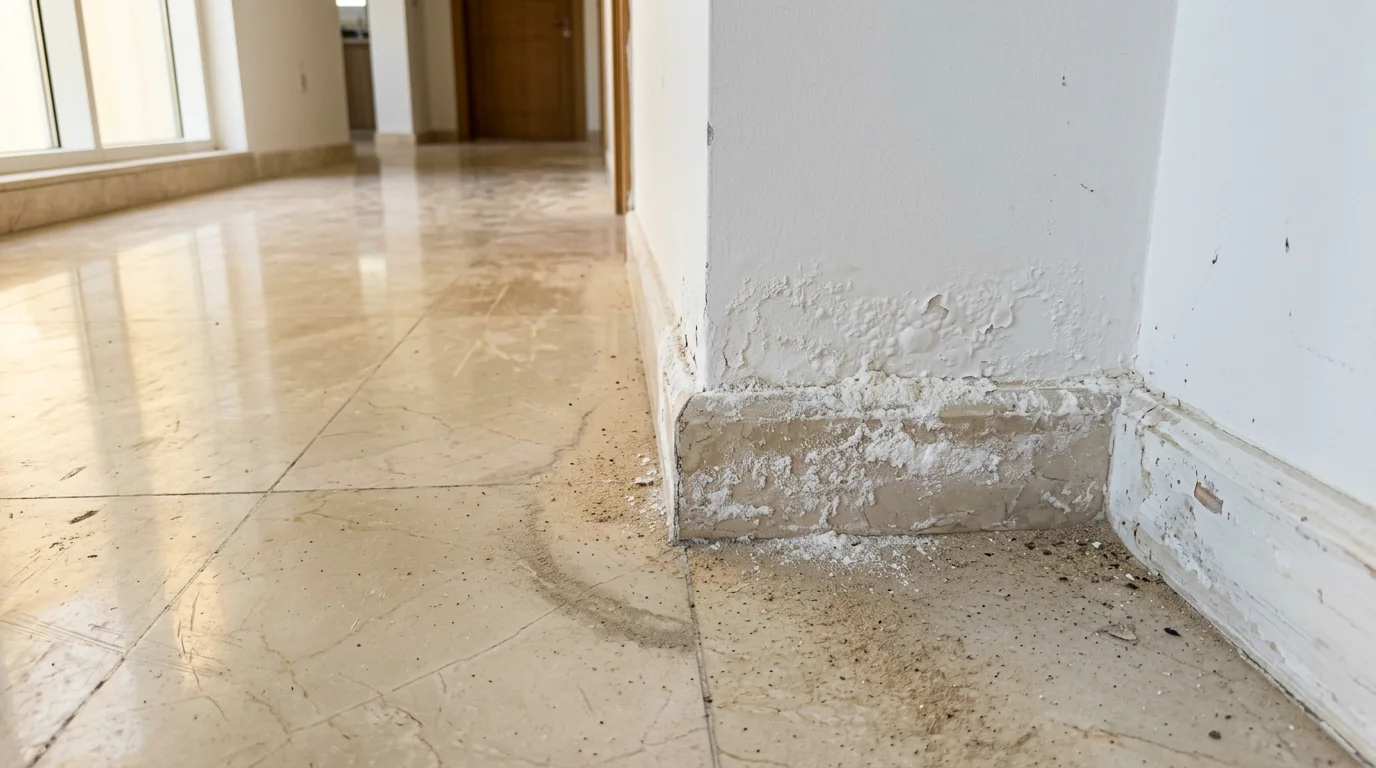
- Full restoration, deep scratches, stains, lippage (uneven tile edges you can feel with a bare foot), chips, or old failed coatings to strip. This is the top of the range, and rightly so, it’s hours of skilled, progressive work.
A floor that just needs a shine and a floor that needs rescuing get very different quotes, even if they’re the same size. If you’re not sure which yours is, here’s how to tell what’s actually wrong with a cloudy marble floor.
2. The size and layout of the area
Marble is priced per sqm, so more floor costs more, obvious. But layout matters just as much as area:
- Large, open, uninterrupted floors are efficient to machine-polish, so the per-metre rate often drops.
- Small, cut-up spaces, bathrooms, corners, stairs, tight cloakrooms, are slow, hand-detailed work, so the per-metre rate goes up even though the total is small.
- Stairs and skirting are their own thing entirely, labour-heavy and usually priced separately.
3. The type of stone
“Marble polishing” gets used as a catch-all, but the material changes the method:
- Marble, the classic, polishes to a beautiful reflective finish.
- Travertine, porous, often needs filling as well as polishing.
- Granite, harder, needs different (tougher) diamond pads.
- Terrazzo / compucrete, restorable, but its own process.
If you have a mix of surfaces, floors, a marble countertop, a stone feature wall, expect the quote to reflect each.
4. The finish you want
Not everyone wants a mirror. The finish changes both the look and the price:
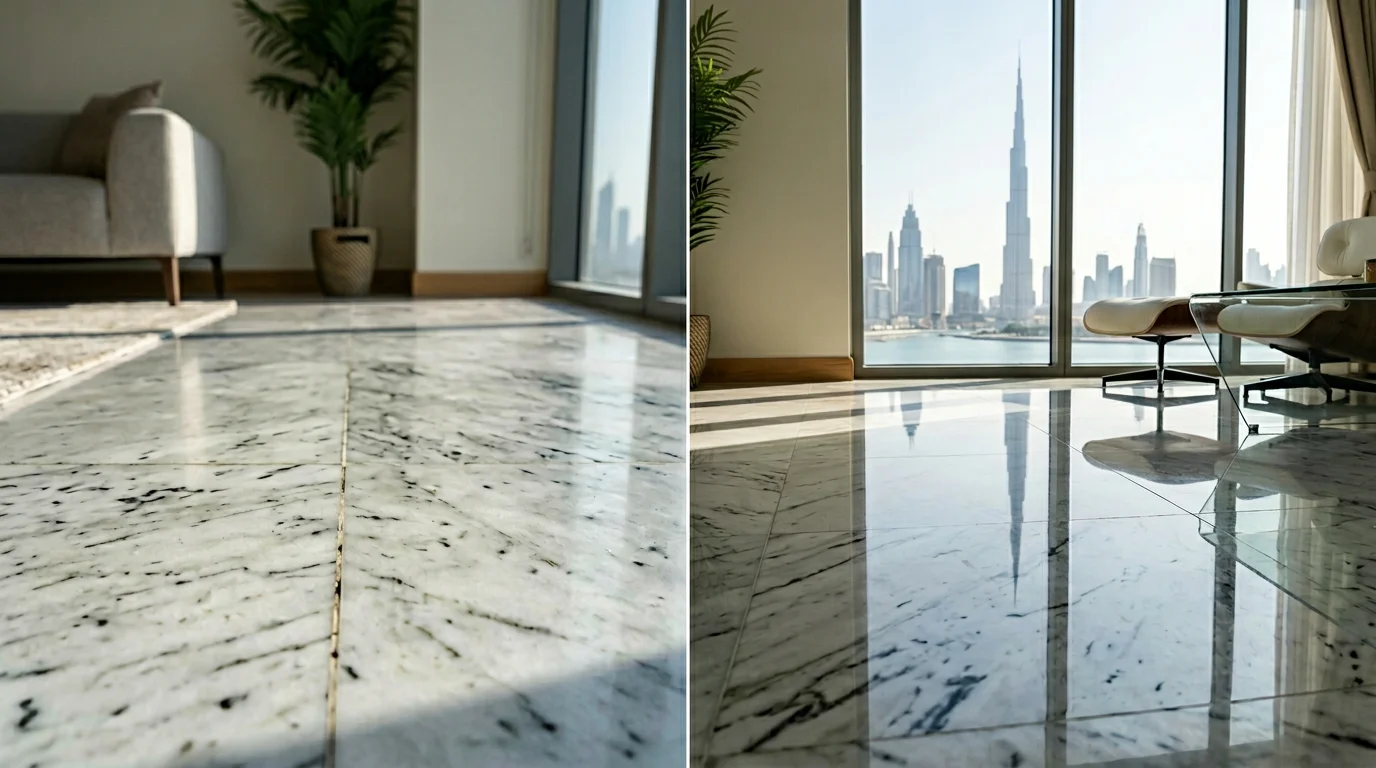
- High-gloss / mirror polish, the classic reflective look.
- Honed / matte, a softer, contemporary, non-reflective finish (and less slippery, which some people prefer).
- Crystallisation, a chemical-and-heat process that hardens the surface to a durable shine; often quoted as an add-on.
5. Sealing (do not skip this)
A penetrating sealer soaks into the polished stone and buys it real protection against the next juice spill or hard-water mop. It’s usually a modest add-on to the polishing cost, and it’s one of the few genuinely false economies to skip. Dubai’s hard water is relentless on unsealed marble.
Where cheap quotes get expensive
Here’s the part I wish more people knew before they picked the lowest number.
The rock-bottom quote is often someone with a single buffing pad. They’ll put a temporary shine on top of the problem, it’ll look great for a few weeks, and then the dullness comes straight back, because they buffed over the etching instead of honing it out. You pay twice: once for the quick fix, again for the proper job.
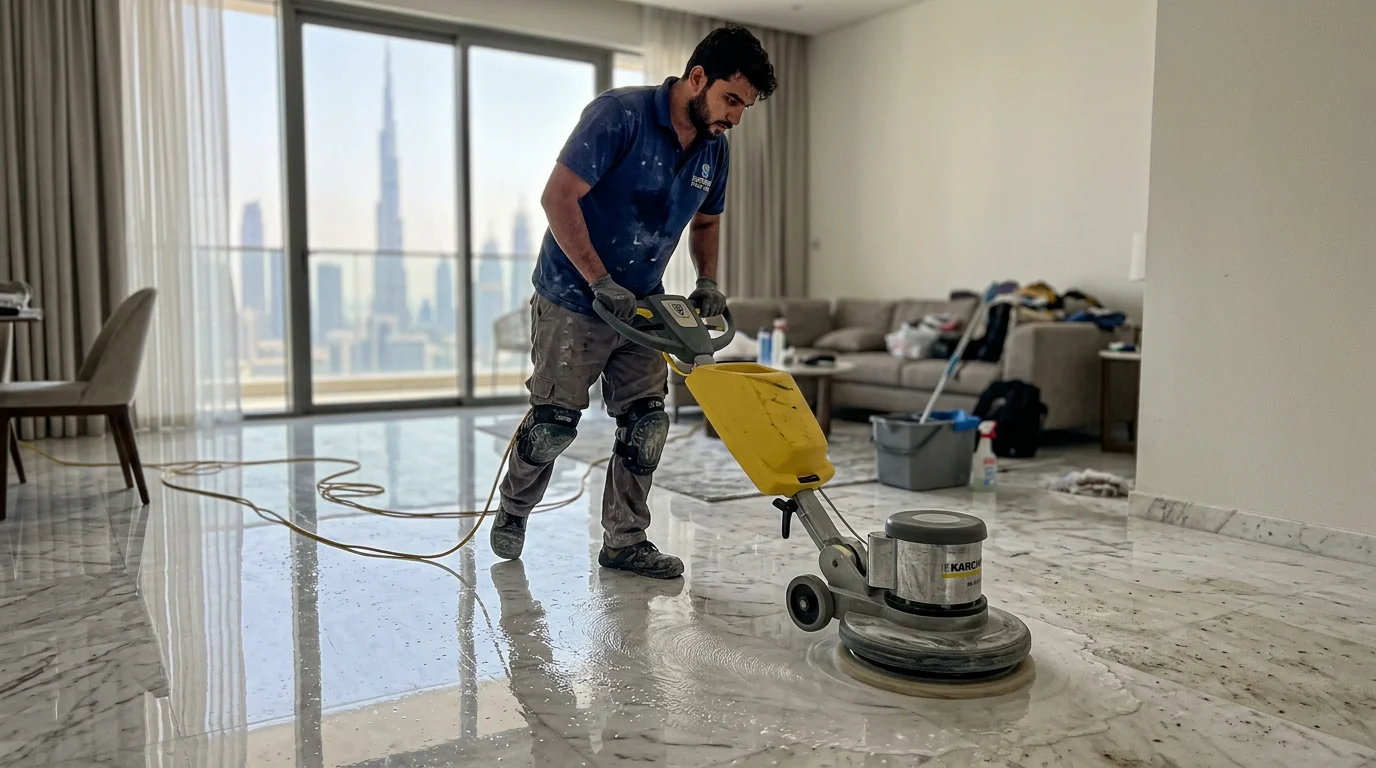
Real marble polishing is mechanical, not magical. Fine diamond abrasives, in stages, removing a whisper-thin worn layer to reveal fresh stone underneath. If a quote is dramatically cheaper than everyone else’s, ask what machine and how many stages, the answer usually explains the price.
The other quiet money-waster: wax and “shine in a bottle” products, whether DIY or from a cut-price cleaner. They yellow, trap dirt, and eventually have to be stripped off, which adds cost to the eventual real restoration. Genuine shine comes from the stone, not a coating.
If you want to see how the professional process actually works end to end, that’s the heart of our marble polishing and stone restoration service.
How to get an accurate quote (and not overpay)
A few things that genuinely help:
- Send photos first. A clear shot in raking side-light (get low, shoot toward a window) tells a technician most of what they need to estimate.
- Measure your area roughly. Even a ballpark sqm figure turns “it depends” into a real range.
- Ask what’s included, honing vs buffing, sealing, stairs, skirting, moving furniture. Compare scope, not just the headline number.
- Bundle the work. Polishing several rooms in one visit is more efficient than call-outs spread over months, and often lowers the per-metre rate.
- Get the free on-site assessment for anything beyond a simple buff, it’s the only way to price condition accurately.
How long does it take?
- A single room / light polish: often the same day.
- A full apartment: typically 1-2 days.
- A villa or heavy restoration: 2-4 days, sometimes more with crystallisation and sealing curing time.
Good news for apartment dwellers: modern polishing is dust-managed, so it’s far less disruptive than people fear.
Quick FAQ
How is marble polishing priced in Dubai, per hour or per metre?
Almost always per square metre, adjusted for the condition of the stone. Small jobs may carry a minimum charge, and extras like stairs, skirting, sealing or crystallisation are usually priced separately.
Why are marble polishing quotes so different from each other?
Because they’re often not the same job. A cheap quote may be a quick surface buff that fades in weeks; a proper quote includes honing out the damage, multiple polishing stages and sealing. Always ask what process and how many stages are included.
Is marble polishing cheaper than replacing the floor?
Almost always, and by a wide margin. Polishing and restoration bring back the original stone you already own, whereas replacement means ripping out, re-buying and re-laying, many times the cost and far more disruption.
How often should marble floors be polished in Dubai?
Roughly every one to three years for homes, sooner for busy entrances, kitchens and bathrooms. Dubai’s hard water and fine dust dull marble faster than milder climates.
Does the price include sealing?
Not always, check. Sealing is usually a modest add-on, and it’s well worth including, because unsealed marble in Dubai’s hard-water conditions dulls and stains far faster.
The honest bottom line
Marble polishing in Dubai realistically runs around AED 15-50 per sqm, but that number only means something once someone has seen the condition of your floor, a light buff and a full restoration are worlds apart in effort and price. Judge quotes on process and scope, not the headline rate, insist on proper honing and sealing rather than a temporary buff, and you’ll pay once for a floor that stays beautiful for years instead of twice for one that dulls in weeks.
Want a real number for your actual floor? Send us a photo on WhatsApp for a quick estimate, or book a free on-site assessment. ArabCare restores marble across Dubai, from Marina apartments to Palm Jumeirah villas. Book a free visit, see our stone & marble service, or read what Dubai homeowners say.