The power goes off in the kitchen, or at 3am, or every time the water heater kicks in. Most people describe this as “the breaker keeps tripping”, and then spend a lot of money explaining it to someone over the phone.
It is worth knowing that there are two different devices in your distribution board, they trip for completely different reasons, and telling them apart takes thirty seconds with the cupboard door open. That single fact changes what you check, what you can safely do yourself, and what you should describe to the electrician.
We do this work across Dubai, and we also covered the warning signs that come before a trip in electrical faults every Dubai homeowner should never ignore. This article is about the fault-finding side.
The two devices, and why it matters
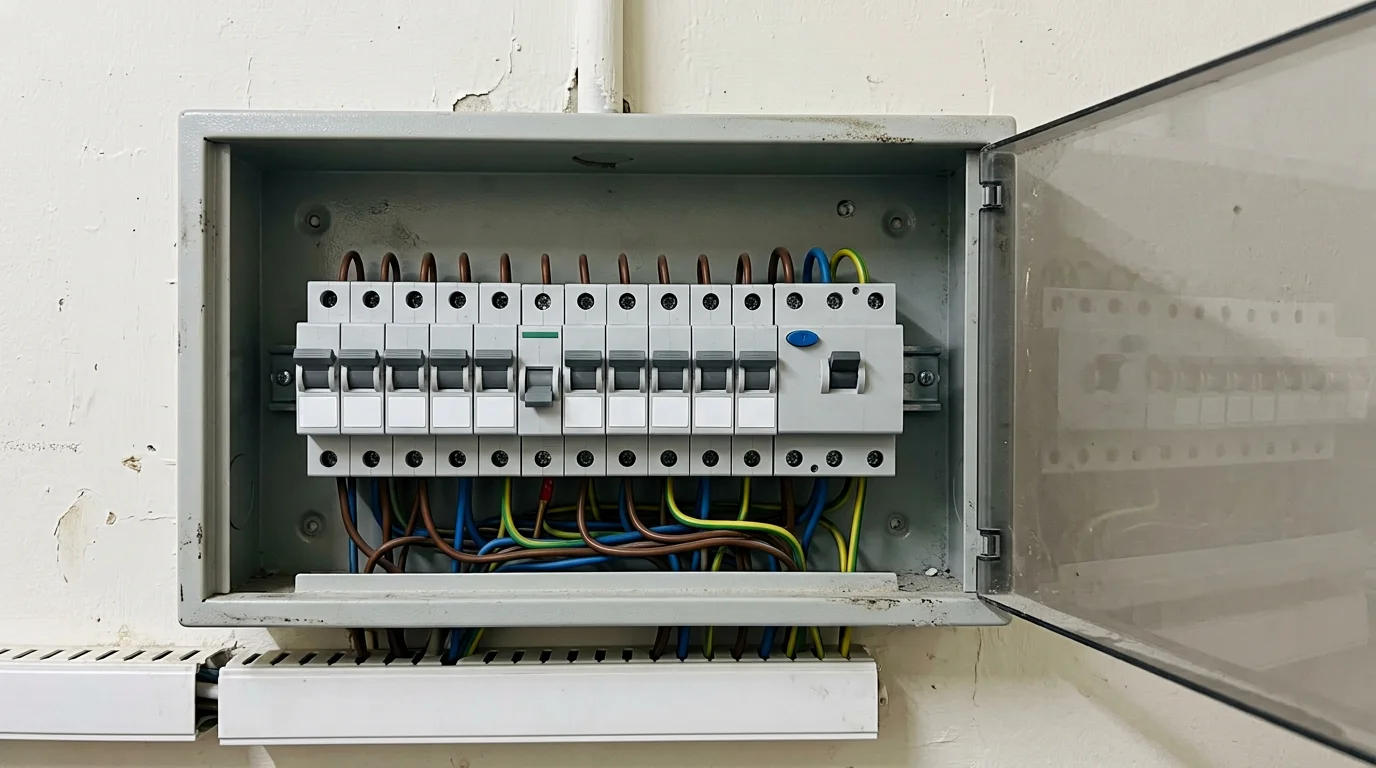
A breaker for the circuit (MCB or RCBO without the leak part). It reacts to too much current: an overload, or a dead short between live and neutral. Its job is to protect cables from overheating.
A residual current device (RCD, RCCB, ELCB, or an RCBO with the test button on it). It does not care about load at all. It compares the current leaving on live with the current returning on neutral. If they do not match, current is escaping somewhere, usually toward earth, and the device cuts power. The figure that matters is 30 milliamps. That is not enough to hurt you seriously, and it is far below anything that would blow a normal breaker, which is precisely the point.
The reason this distinction matters in a Dubai home: an MCB problem and an RCD problem have almost nothing in common. Overload faults are about how much you plug into one circuit. Leakage faults are about insulation, moisture and age. If you describe the symptom as “the power trips”, the electrician arrives prepared for one of the two and sometimes both.
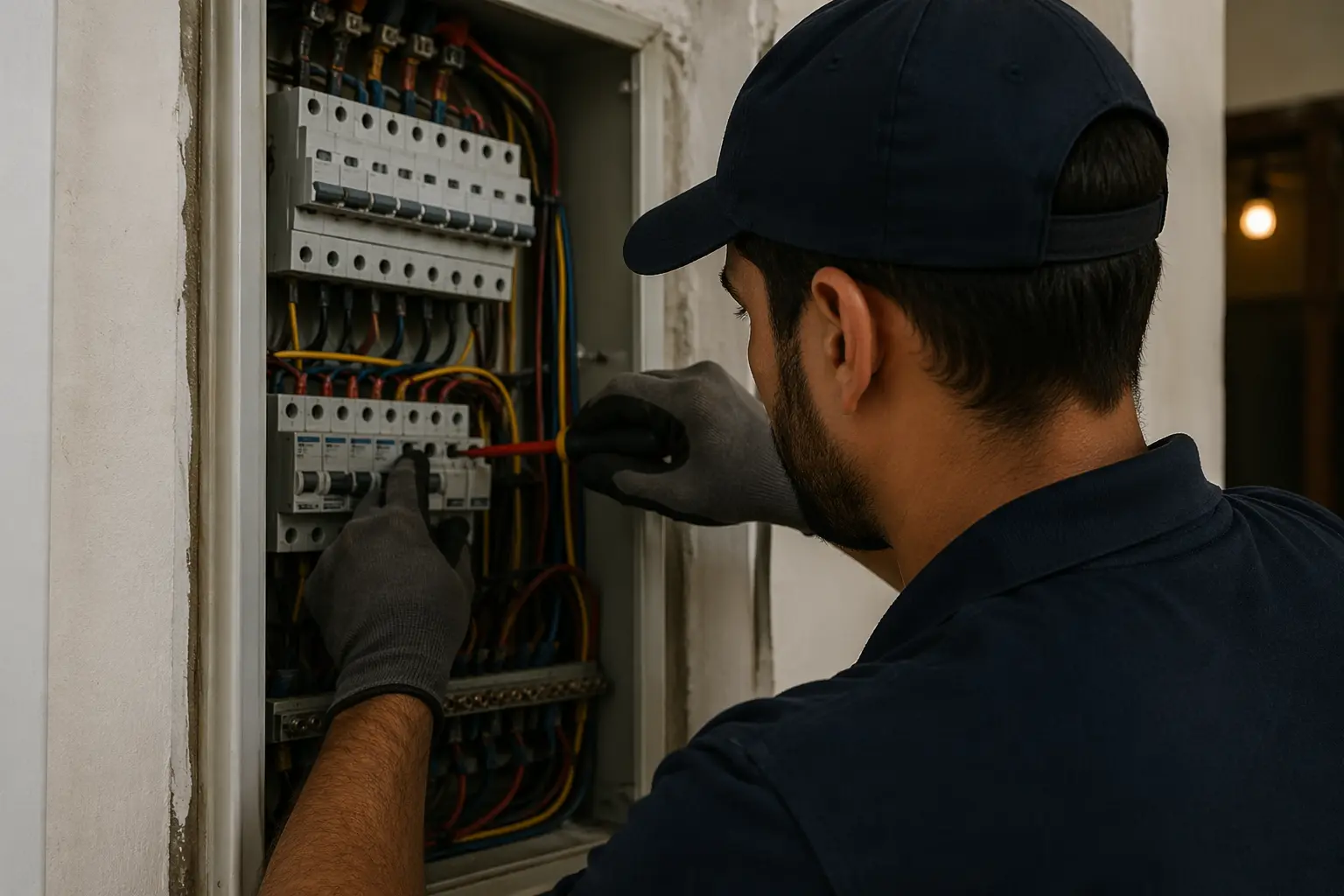
Look at the board while the fault is present. Which switch is down? Note whether it is the wide one with a test button, and which circuit label has gone dark. Photograph the board. That photograph is worth more than a phone description.
“It trips when the AC comes on” versus “it trips at 3am”
The timing pattern is the diagnosis.
| Pattern | What it points to |
|---|---|
| Trips the moment a big appliance starts, breaker type without a test button | Overload on that circuit, or a failing motor or capacitor drawing excessive current |
| Trips an RCD within seconds of switching something on | Leakage in that appliance or its cable, often a water heater element |
| Trips an RCD randomly, in the middle of the night | A thermostat-driven load cycling on its own, and total leakage on the circuit already near 30 mA |
| Trips after rain, or when the lawn sprinklers run | Outdoor lighting, an exterior socket, a gate motor or a water feature letting in moisture |
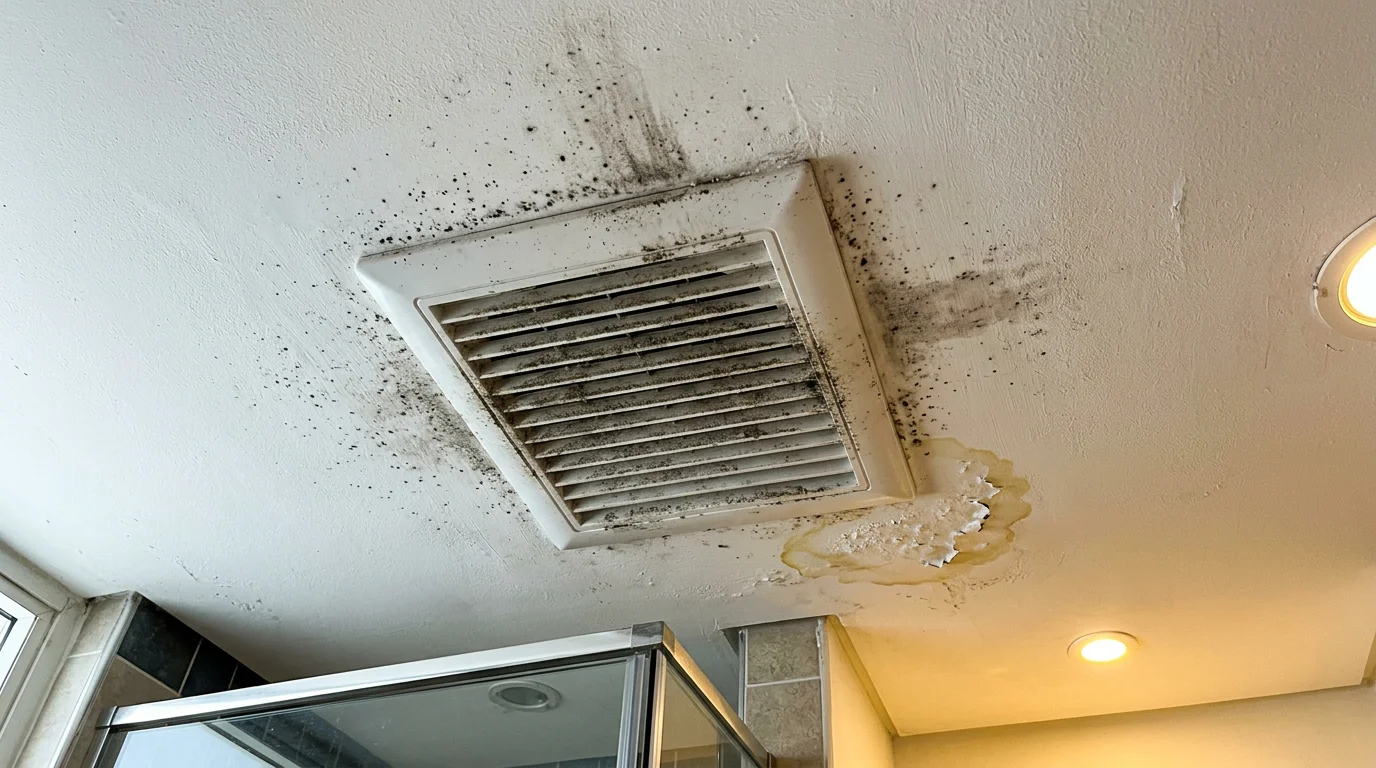
| Trips when the bathroom fan or light is used | Moisture in a ceiling fitting, or the fan is wired through a shared circuit with a wet-area fault |
| Trips even when the appliance is switched off at its own switch | Very often a neutral-to-earth fault. The switch only breaks the live conductor |
| Trips only on one socket ring in the kitchen | The appliance chain: dishwasher, microwave, kettle, coffee machine, all sharing a circuit that is too small for the load |
| The main RCD trips and takes half the house with it | Cumulative leakage. No single appliance is faulty; the sum of them has crossed the threshold |
| Power is dead with nothing tripped in your board | Look at the meter and the building side, not your circuits |
That “trips even when switched off” row surprises people. If a fault exists between neutral and earth, the return current from other appliances on the same device can flow through it, and the RCD sees an imbalance immediately. So an appliance with its isolator off can still be the guilty one, and the only reliable way to find it is the isolation sequence below.
Why modern homes trip RCDs that never used to
This is the answer most people never hear, and it is why a “faulty” RCD sometimes isn’t.
Every piece of modern electronics leaks a small amount of current to earth on purpose. Switch-mode power supplies, LED drivers, washing machines, fridges, inverters, EV chargers and solar gear all contain input filters that bleed somewhere around 1 to 3 milliamps each. Ten or fifteen of those on one residual current device puts you within a whisker of the 30 mA threshold without a single fault in the building. Then the fridge compressor starts, its leakage spikes for a fraction of a second, and the RCD does exactly what it was designed to do.
Add a second layer that matters in Dubai specifically. Much of that modern leakage is pulsating rather than a clean sine wave, and older Type AC residual current devices respond badly to it. The core can saturate, and the device either nuisance-trips or, in the worse case, fails to trip when it matters. Newer installations use Type A, and Type F or B where there are drives, solar inverters or EV charging.
Which leads to the practical conclusion: on an older board where nuisance tripping has begun, the right work is often measurement plus redistribution of circuits plus upgrading the protective device, not repeatedly replacing the RCD. If someone tells you the fix is to swap in a higher-sensitivity or a plain breaker to stop the tripping, walk away. Removing a life-safety device to stop a noise is not a repair.
The safe checks you can do yourself
- Press the test button on each RCD and RCBO, once a month. It should snap off immediately and clearly. If nothing happens, the protection is not working regardless of whether the switch is on. This is a ten-second habit and almost nobody has it.
- Reset once, deliberately. One reset to see whether the fault is still there is reasonable. Resetting it repeatedly, especially with a warm or noisy device, is how a damaged joint becomes a fire.
- Unplug, do not switch off. On the affected circuit, unplug everything, then re-energise. If it holds, reintroduce appliances one at a time. You are looking for the item that repeats the trip. Switching an appliance off at its own switch does not isolate a neutral-to-earth fault, unplugging it does.
- Look and smell at the sockets, not just the board. Scorching, a warm plate, a melted plug pin, a buzzing sound, or a smell of hot plastic means stop and call. We covered those signs in the warning-signs article above.
- Write down what you saw. Which device, which circuits, what time, what was running, whether it followed rain or a shower, and whether the test button worked. A contractor can usually halve the diagnosis time from that list.
- Do not open the distribution board itself. Busbars inside a consumer unit remain live with the main switch off on many boards. Panel work here is for a licensed electrician, and any new or modified permanent circuit should be done by one, with whatever building or community approval your property requires.
How the fault actually gets found
When you read this back, it should sound like a process, not a guess.
- Circuit identification and a leakage survey. Clamp measurements on the earth conductor and per circuit to see how much leakage is present in normal operation, with large loads cycling.
- Insulation resistance testing. With the circuit dead, a 500 V DC test between live, neutral and earth. Installations should measure well above 1 MΩ; a branch reading below that is the one with a compromised path. This is what distinguishes a real insulation fault from nuisance cumulative leakage.
- Appliance testing on the suspects, especially anything with a heating element or a water connection: water heater, dishwasher, washing machine, tumble dryer, under-counter boiler, garden pump.
- Environmental correlation. If trips cluster around rain or irrigation, the outdoor lighting run, exterior sockets and any water feature get tested as a priority.
- Board condition. Age, corroded terminations, a device that has been replaced at the wrong type or rating, missing circuit labels, and whether devices are still made and certifiable.
- Corrective scope. Rewire or split a circuit, redistribute electronics across more RCD-protected ways, move an appliance onto its own RCBO, upgrade Type AC devices to Type A or F where the loads justify it, and replace what is damaged. Then retest and hand over the readings.
That last sentence matters for the next fault you have. Ask for the test results in writing. Any electrician who measures a circuit and will not tell you the number is costing you money on the second visit.
When it is not your wiring at all
Three Dubai-specific things wear the same symptom:
- Meter or building side. If everything is off and nothing in your board has tripped, this is upstream. Check the meter status and the building’s own distribution, then the utility’s outage and billing channels, before you pay for a call-out on your circuits.
- A shared wall with a neighbour’s leak. Water tracking through a wall into a socket box will present as a “tripping problem”. The electrical symptom is the visible one; the plumbing fault is the actual one. If a trip started after a leak in the flat or villa next door, that is the sequence to mention.
- The generator or changeover on a villa with backup power. If tripping only happens around switchover, the fault is in that arrangement and the contractor who maintains it should look first.
What to book, and what to ask for
Fault finding on a nuisance trip is an inspection job, and the fix is usually one of a short list: an appliance, a circuit, a device type, or a damaged run of cable. We carry the test gear for the insulation and leakage side and we do not start a job by replacing parts, because a board full of new devices with the same fault is a very common thing to inherit.
Electrical services covers diagnosis, rewiring and protection upgrades, and where the cause turns out to be moisture in a fitting we can bring in bathroom or gypsum and ceiling work under the same visit. Request an inspection and include the answers to the pattern table above. If your property has a maintenance contract, this is exactly the class of job that belongs inside it: see what an annual maintenance contract actually includes in Dubai, and our office maintenance checklist for the commercial version of the same routine.
Frequently asked questions
How do I know whether it is the RCD or the breaker?
Open the board and look at which switch is off while the power is out. A wide switch with a test button is a residual current device, which means leakage. A narrow switch without a test button protects one circuit against overload and short circuit. Photograph it before you reset anything.
Why does my electricity trip only at night?
Usually a thermostat-driven load starting on its own, most often a fridge, a water heater or an AC compressor, on a circuit already carrying so much normal electronic leakage that the extra milliamps push it over. It is a measurement problem rather than a mystery.
Can humidity in Dubai cause a trip?
Yes, and this is one of the most common local causes. Moisture reaches a fitting in a ceiling, an exterior light, a socket on an exposed balcony or a garden lighting run, and creates a leakage path to earth that only exists while humidity is high. Trips that appear during the muggier weeks and ease later in the year usually point here.
Why does my water heater keep tripping the RCD?
The heating element is a resistor surrounded by insulation, sitting in water. As that insulation ages or scales through, current leaks to the tank’s earth. It is a classic leakage fault and it can exist with the heater switched off at its isolator, because the isolator may only break the live conductor.
Is it safe to keep resetting the breaker until it holds?
No. If it holds temporarily, the fault is intermittent and will still be there, and repeated resets on a damaged joint or a wet fitting is how a nuisance trip becomes a burn. One reset to check is reasonable; a workaround is not.
Should I replace an old RCD that trips often?
Possibly, but test first. A device upgraded from Type AC to Type A or F because of the electronics on the circuit is a legitimate change; swapping a correctly functioning device to stop it protecting you is not. Ask for the leakage and insulation resistance readings and you will know which one you need.