Nobody calls us about an office on a good day.
They call when the AC has quit on the hottest afternoon of the year, when a meeting-room ceiling has developed a brown stain twenty minutes before a client walks in, or when a tripped board has taken down half the floor and nobody can find the panel. By then it’s not maintenance, it’s an emergency, and emergencies in Dubai are expensive, disruptive, and almost always avoidable.
I’ve spent years looking after commercial spaces across the city, towers in the Marina, offices in Business Bay, retail units, a few hotel back-of-house jobs nobody ever sees. And the pattern is the same everywhere: the businesses that treat maintenance as a schedule spend a fraction of what the ones who treat it as a fire drill do.
So here’s the checklist I wish every office manager in Dubai had pinned above their desk. Not theory, the actual things that go wrong, why they go wrong here specifically, and what to check before they cost you.
Why offices in Dubai break differently
A quick bit of context, because it matters. Dubai is hard on buildings in ways a lot of imported facilities advice doesn’t account for:
- The heat and the AC never stop. Systems running 24/7 for ten months wear out faster, and condensation finds its way into ceilings and walls.
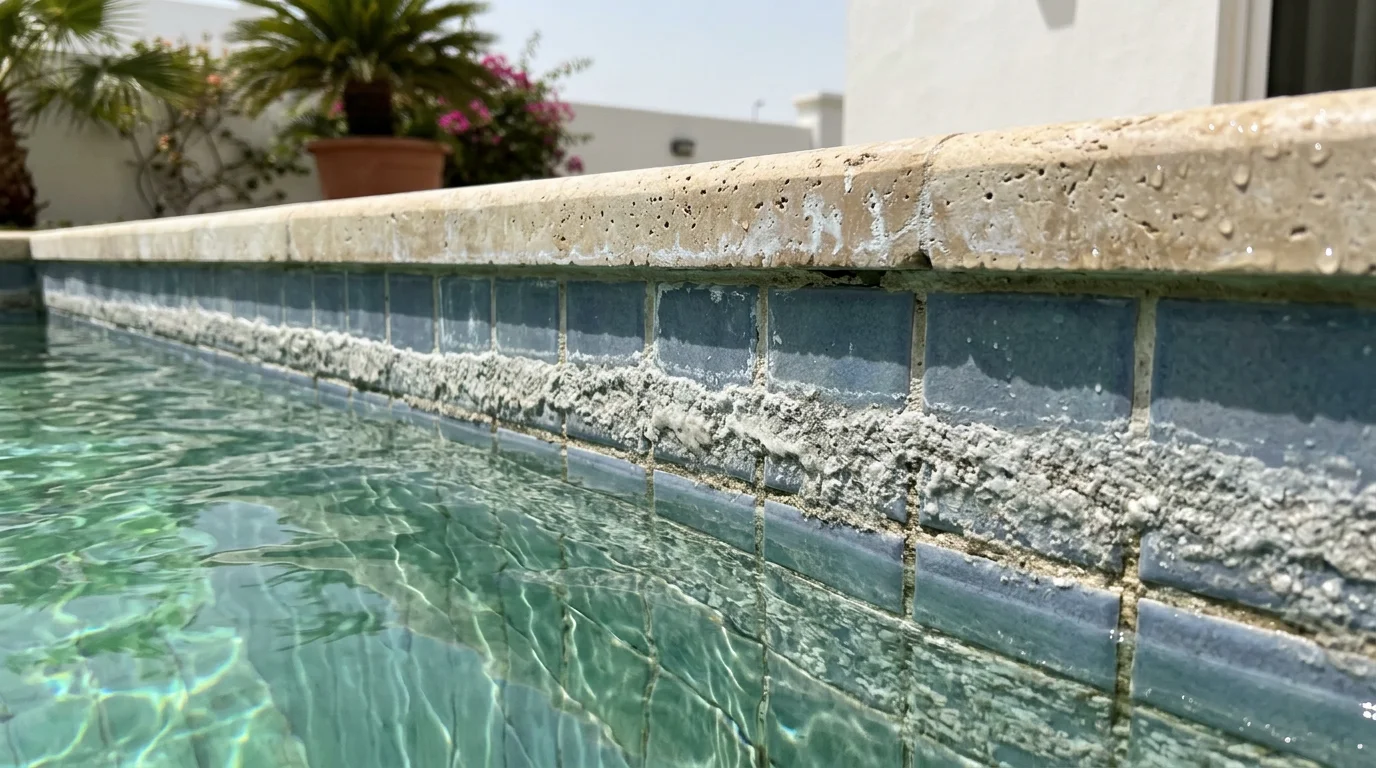
- The water is hard. It scales up pipes, taps, water coolers and pantry plumbing quietly until something blocks or leaks.
- Fine dust gets into everything , vents, sensors, electrical contacts, door tracks.
- High occupancy + glass-and-marble finishes mean wear shows fast and looks bad in front of clients.
That’s the backdrop. Now the checklist.
1. Electrical, the one that becomes an emergency fastest
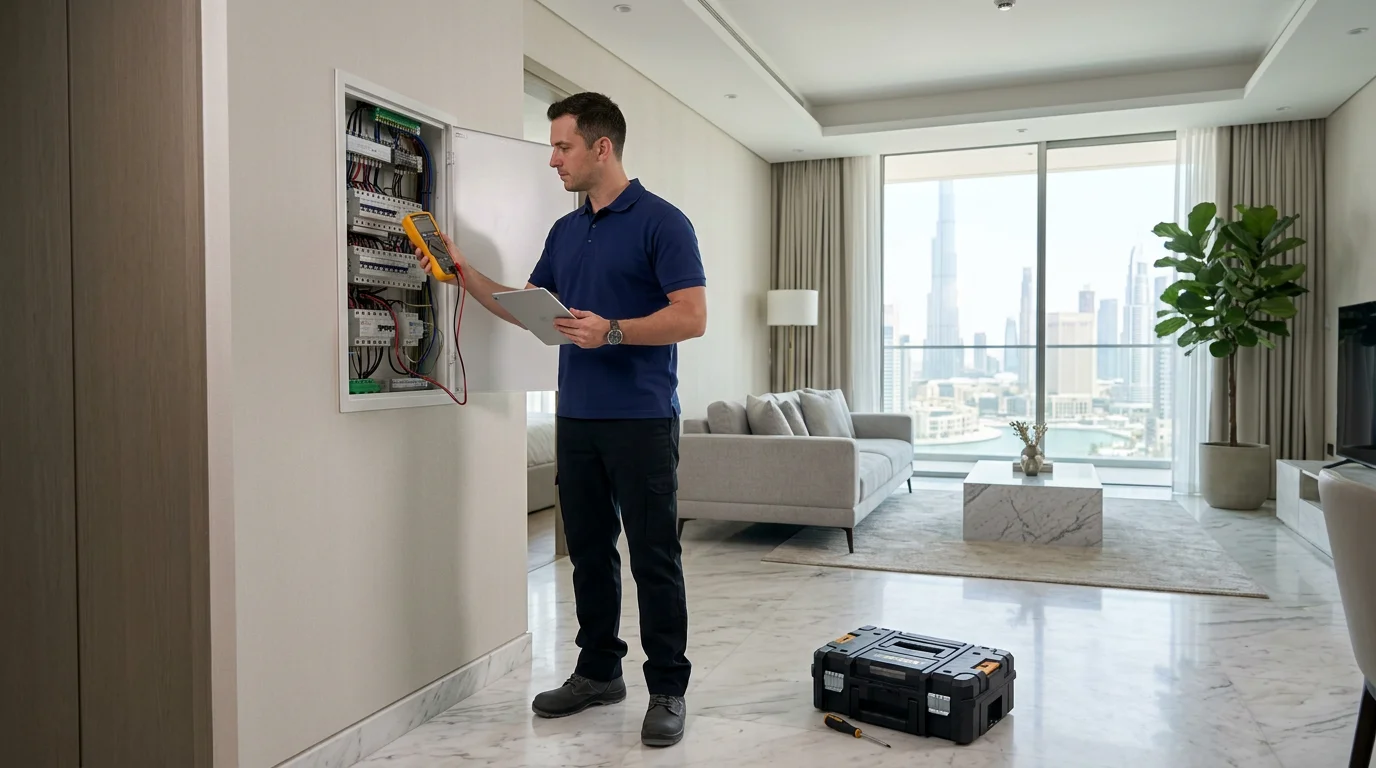
Electrical faults go from “minor” to “everyone’s sitting in the dark” with no warning. They’re also a genuine safety matter.
Check regularly:
- Any socket or switch that feels warm, is discoloured, or buzzes
- MCBs that trip repeatedly (that’s a symptom, not bad luck)
- Flickering lights, especially under load
- Visibly overloaded power strips under desks (the classic Dubai office daisy-chain)
- Distribution board: labelled, accessible, and not blocked by storage
A repeatedly tripping breaker is the building trying to tell you something. Resetting it and walking away is the office equivalent of ignoring a warning light on your dashboard.
Don’t DIY commercial electrical work, it needs a qualified electrician, for both safety and compliance. This is exactly what our electrical maintenance service is built to catch on a scheduled visit, long before it becomes a 4pm crisis.
2. AC & ventilation, comfort, air quality, and a silent water risk
In a Dubai office, the AC isn’t a comfort feature, it’s load-bearing. When it underperforms, productivity drops with it, and the bigger danger is what cooling systems do behind the ceiling.
Check regularly:
- Uneven cooling between rooms, or “dead zones”
- Musty smells (a sign of moisture or dirty coils)
- Visible dust around vents and grilles
- Condensation marks or damp patches on ceiling tiles, the early warning of a drainage or insulation problem
- Filters: are they actually being changed, or just ticked off a sheet?
That damp ceiling tile is the one I’d circle in red. Left alone, a slow AC leak ruins ceilings, feeds mould, and eventually drips onto someone’s laptop.
3. Ceilings, partitions & walls, your professional image
Clients judge your business by your space in the first ten seconds. Tired ceilings and scuffed partitions quietly undercut everything else you’ve invested in.
Check regularly:
- Stained, sagging, or discoloured false-ceiling tiles
- Gaps or damage where partitions meet ceilings/walls
- Cracks around door frames and corners
- Flickering or dead panels in recessed lighting
- Loose or rattling vents and diffusers
Swapping tiles and refreshing partitions is fast and cheap compared to the impression a water-stained ceiling makes. Our gypsum & false-ceiling work handles exactly this, usually after hours, so your team never sees the ladders.
4. Floors, marble, tile & grout in high-traffic zones
Reception areas, corridors and lift lobbies take a beating, and Dubai’s hard water plus foot traffic dulls premium finishes fast.
Check regularly:
- Cloudy or dull marble in lobbies and reception (hard water and harsh cleaners are usually the cause, here’s why that happens)
- Cracked, lifting, or hollow-sounding tiles (a trip hazard and a liability)
- Grout that’s darkening, crumbling, or growing mould near pantries and bathrooms
- Loose skirting and transition strips
Worn floors aren’t just cosmetic, a lifted tile in a corridor is a slip-and-fall claim waiting to happen. We keep commercial stone & marble and tile surfaces both safe and presentable.
5. Plumbing, pantries & washrooms
Nothing damages staff morale and client perception quite like a washroom that smells or a pantry tap that drips all day.
Check regularly:
- Slow drains, gurgling, or recurring smells (early signs of a partial blockage)
- Dripping taps and running cisterns (small leaks, big water bills)
- Water cooler and pantry connections for scale and seepage
- Washroom fixtures, seals and silicone for mould and wear
- Any sign of damp under sinks or behind units
Hard-water scale is the quiet villain here, it builds inside fittings until flow drops or something fails. Catching it on a schedule beats discovering it via a flooded pantry on a Sunday. For washrooms and pantries that need more than a fix, our bathroom & wet-area service covers full refurbishment.
6. Doors, locks & access points
The least glamorous category, and the one staff complain about daily: the meeting-room door that won’t latch, the main entrance that drags, the lock that needs a wiggle.
Check regularly:
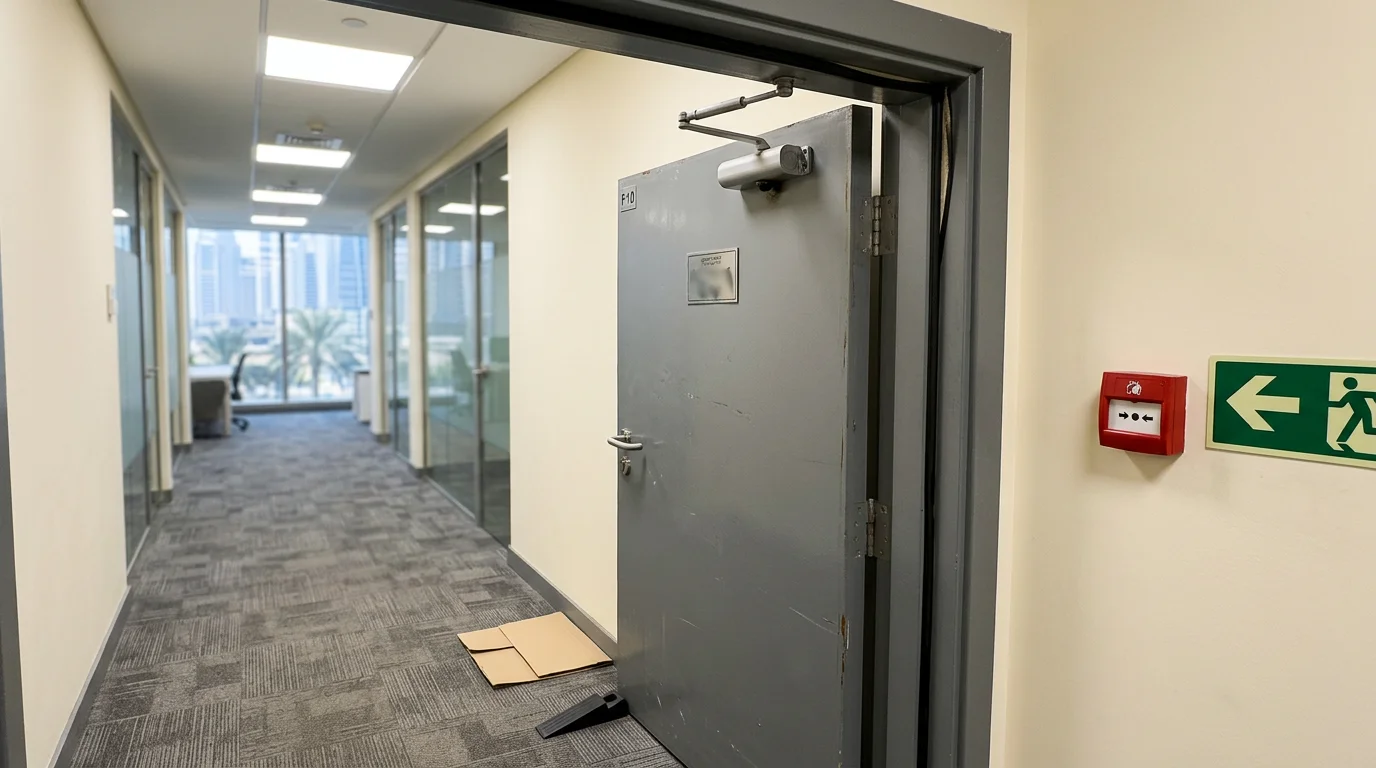
- Doors dragging, sticking, or not self-closing properly
- Worn hinges, loose handles, faulty locks
- Door closers on fire doors (a compliance point, not just convenience)
- Glass-door fittings and floor springs
7. The thing most offices skip: a schedule
Here’s the real lesson behind every item above. The problem is rarely the fault, it’s the absence of a routine that would have caught it.
The businesses that don’t get the 4pm panic calls all do the same thing: they have scheduled, recurring maintenance instead of reactive repairs. A regular visit means a technician spots the warm socket, the damp tile, the scaling tap while they’re still cheap to fix.
That’s the whole idea behind an annual maintenance contract (AMC) , predictable cost, one accountable team, and someone whose job is to find problems before you do. For most Dubai offices it works out cheaper than the emergency call-outs it prevents, and it protects the two things hardest to put a price on: your reputation in front of clients, and the productivity of your staff.
Your quick monthly walk-round
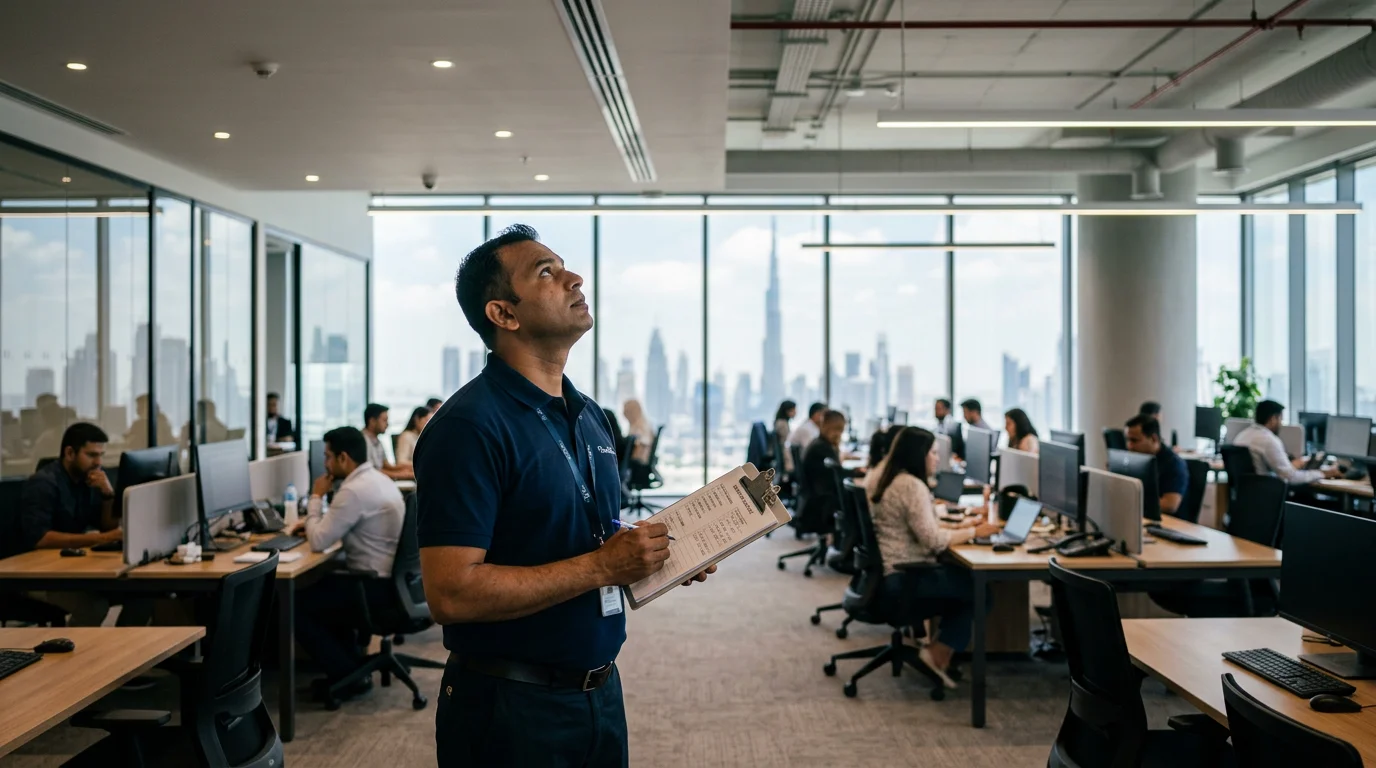
If you do nothing else, walk your floor once a month with this in hand:
- Touch a few sockets and switches, any warm or discoloured?
- Look up, any stained, sagging, or damp ceiling tiles?
- Stand in reception, does the floor look dull, cracked, or lifting?
- Walk the corridor, any rattles, flickers, or sticking doors?
- Check the pantry and washroom, drips, smells, slow drains?
- Ask the team, what’s the one thing that’s been “a bit off” lately?
Write it down and get it handled before it grows. That ten-minute walk is the cheapest maintenance you’ll ever do.
Quick FAQ
How often should an office be professionally maintained in Dubai?
A light professional check-up every 1-3 months suits most offices, with deeper attention to AC, electrical and plumbing. High-traffic spaces, restaurants and retail usually need more frequent visits because of heavier wear.
What’s the difference between reactive repairs and an annual maintenance contract?
Reactive means you call someone after something breaks, usually at a premium, often as an emergency. An annual maintenance contract (AMC) is scheduled, preventive care that catches small issues early. For most Dubai offices the AMC works out cheaper overall and avoids disruptive breakdowns.
Can office maintenance be done outside working hours?
Yes. We schedule disruptive work, ceilings, floor polishing, electrical, painting, for evenings or weekends so your team isn’t interrupted and clients never see the disruption.
What does an office maintenance contract usually cover?
Typically electrical, AC and ventilation checks, plumbing and washrooms, ceilings and partitions, flooring, doors and general repairs, plus priority response for anything urgent. Contracts are tailored to the size and type of your space.
Which is the most commonly ignored office maintenance issue?
Damp ceiling tiles from slow AC leaks, and repeatedly tripping breakers. Both look minor, both are early warnings, and both get expensive fast when left alone.
The short version
Almost every expensive office emergency in Dubai started as a small, visible warning that someone walked past for weeks. Warm socket. Damp tile. Dripping tap. Dull lobby floor. The fix isn’t a bigger budget, it’s a schedule that catches those signs early.
Do the monthly walk-round. Hand the rest to a team whose job is to find problems before you do.
Want the panic calls to stop? ArabCare keeps Dubai offices running with scheduled, after-hours maintenance and fast response. See our office maintenance service, explore coverage in Dubai Marina and Palm Jumeirah, or book a free site visit.